
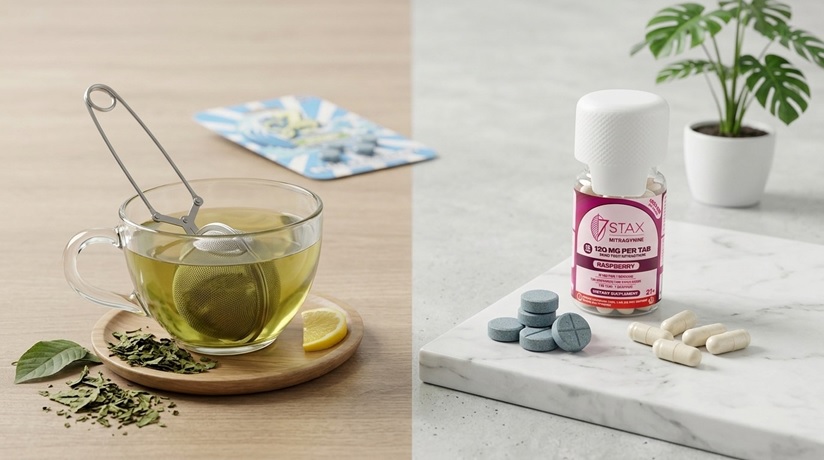

For most of kratom’s long history, the leaves were brewed into tea. Hot water, ground leaf, lemon for extraction, twenty minutes of steeping. Drink, wait, feel.
Today the kratom market has split. Traditionalists still brew tea. Modern users buy tablets that deliver a precise mitragynine dose without the bitter taste or the prep work.
Which one wins in 2026? Both have advantages. This guide compares the two formats on the dimensions that actually matter so you pick the right one for your routine.
Kratom Tea: The Traditional Format
Kratom tea is made by simmering ground leaf in hot water with a small amount of citrus to extract the alkaloids.
Two to four grams of powder produces one serving of tea.
Total prep time runs twenty to thirty minutes for a single brew.
Tea hits gradually because the warm liquid is digested slowly. Onset takes thirty to forty-five minutes.
Effect duration runs four to six hours, often slightly longer than other formats.
Kratom Tablets: The Modern Format
Kratom tablets like MGM-15 deliver a factory-locked dose of mitragynine, usually 25 to 30 milligrams per tablet.
Tablets dissolve quickly and the active compound hits your bloodstream in twenty to thirty minutes.
No prep. No taste. No mess.
A single bottle of MGM-15 kratom tablets carries the same mitragynine content as 50 to 80 grams of powder. The price difference reflects the convenience and precision.
Dose Accuracy
Tea dosing is approximate. Two scoops from the same bag can vary by 30 percent in alkaloid content because plant material settles unevenly.
Brewing technique adds another variable. Longer simmer, more lemon, hotter water all change extraction efficiency.
Tablets remove every variable. The label tells you exactly how much mitragynine entered your body.
For users who care about precise dosing, tablets win clearly.
Taste and Convenience
Kratom tea tastes earthy, bitter, and grassy even after citrus extraction. Many regulars add honey or strong flavored teas to mask the taste.
Tablets are tasteless or mildly flavored. You swallow them like any other supplement.
Convenience favors tablets by a wide margin. Tea requires twenty minutes of kitchen time. Tablets take ten seconds.
For mornings on the way out the door, tablets are the obvious choice.
Onset Speed
Tea: 30 to 45 minutes for first effect, with a gradual rise to peak at 90 minutes.
Tablets: 20 to 30 minutes for first effect, with peak at 60 to 90 minutes.
Tablets are faster but not dramatically so.
If you want immediate effect, neither format wins. Liquid shots are the fastest mitragynine format.
If you want predictable timing for a work session, tablets are slightly more reliable.
Strain Customization
Tea wins on strain variety. You can brew red Bali in the evening for relaxation and green Maeng Da in the morning for energy.
Tablets isolate the alkaloid rather than carrying the full plant profile. Strain effects are subtler.
For traditional kratom users who appreciate strain rotation, tea is the better format.
For users who want a clean, consistent productivity effect, tablets remove the variability.
Cost per Session
A 250-gram bag of premium kratom powder costs forty to eighty dollars and yields about 100 servings of tea.
A bottle of fifteen MGM-15 tablets costs thirty to fifty dollars and yields fifteen sessions.
Cost per session: tea wins on raw price.
But total cost of use includes prep time, taste tolerance, and dose drift. Many users find tablets cost more but save them frustration.
Travel cost is another consideration. Tablets fly cleaner through airport security than green powder.
Choosing Your First Format
If you have never used kratom: tablets. Predictable dose, clean taste, easy to control.
If you have used kratom before and want to dial in: powder or tea. More variables, but more strain options.
If you travel often: tablets. Easier through security.
If you have a tight budget: powder for tea. Lowest cost per gram.
If you want fast onset: liquid shots, then tablets, then tea.
Pick based on your situation, not on tradition or trend.
Long-Term Format Strategy
Keep tablets in your travel bag, your work desk, and your morning routine.
Keep powder at home for unhurried weekend sessions where the prep ritual is part of the experience.
Rotate between formats every couple of weeks to slow tolerance buildup.
Avoid stacking formats on the same day. Pick one and let it work.
Final Word
Kratom tea and tablets each serve a real role.
Tea wins for tradition, strain variety, and cost.
Tablets win for convenience, dose accuracy, and travel.
Many regulars keep both and rotate based on the day.
Verify every product with a lab report. Cycle aggressively to keep tolerance flat. The right format used the right way makes kratom a reliable tool in your daily stack.
Three Quick Mistakes to Avoid
Brewing tea with cold water. Hot water plus citrus is essential.
Stacking tablets and tea in the same session. Pick one.
Skipping water during a kratom session. Mild dehydration is the most common side effect.
Trying a New Format the Smart Way
Order a small bottle or sample pack rather than a large bag.
Take a low dose on a calm day.
Track onset, peak, and duration in a notebook.
Compare against your previous format on the same metrics.
Keep what works. Drop what does not. Format trials should take days, not months.
After three formats, most users settle on one or two as their daily drivers.
Final Word
Kratom tea is the traditional format with strong roots in kratom culture. Kratom tablets are the modern format built for precision and convenience.
Neither one is universally better. Tea wins on strain variety and cost per gram. Tablets win on convenience, dose accuracy, and travel.
Many regulars keep both. Tablets for workdays and travel. Tea for unhurried weekend mornings. Pick the format that matches the moment and you will get more from your kratom routine.
Comments are closed.