
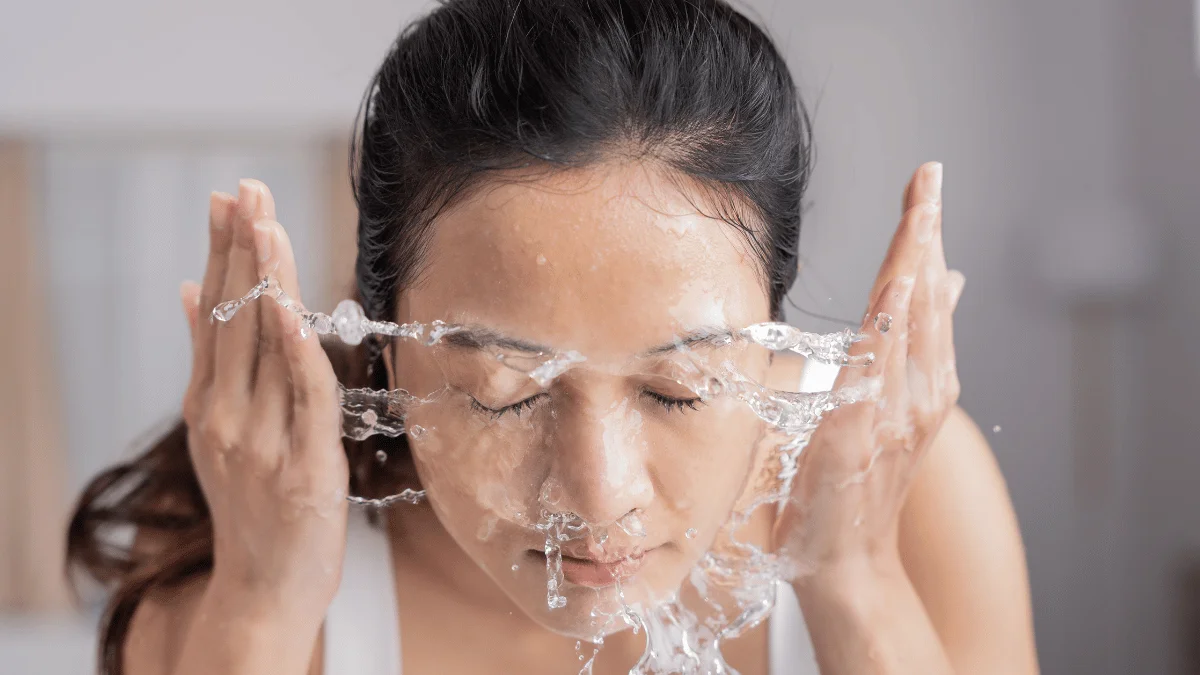

If your face feels tight after cleansing, becomes oily quickly (within an hour), or stings when applying moisturizer, it may be the wrong cleanser. However, people will often blame their moisturiser, weather conditions or age.
Understanding pH levels
The pH scale runs between 0 and 14. Numbers below 7 are considered acidic, and numbers above 7 alkaline. The natural pH of facial skin is around 4.5-5.5 (slightly acidic). This is useful as it helps trap moisture in skin, whilst keeping irritants out.
Issue with cleansers
Traditional bar soaps are often quite high in pH, (around 9-10). This can cause excessive removal of natural oils in the skin, due to the squeaky clean feeling.
Although skin is able to recover (usually within hours), doing this twice daily can cause dryness, redness or spots in some people.
Understanding the ‘balanced’ wording
This is quite broad. Some products specify a pH level. Others just include ‘balanced’. Often ‘balanced’ means it is similar to the natural pH of the skin. However, this is not always true. It also cannot be verified by anyone.
It is a better idea to choose a pH-balanced facial cleanser. Some companies give results from testing on their website, and this could be useful.
Different types of cleansers
- Gel: refreshing. Good for oily/combination skin.
- Cream/Lotion: good for dry/sensitive skin.
- Micellar Water: quick, no rinsing. Good for removing light make-up.
- Oil/Balm: good for removing sunscreen and heavy make-up.
- Foaming: can be good, although some may be harsh.
Ingredients to look for
Humectants (glycerin and hyaluronic acid) will hydrate the skin. Ceramides will strengthen the skin barrier. Gentle cleansers, often referred to as gentle surfactants, will remove dirt without removing too much from the skin. Ingredients such as cocamidopropyl betaine are common.
Sodium lauryl sulphate or other sulphates can be very effective cleansers. However, they can be drying for some skin types. Many people find they work fine with these, but some people will not. Your skin will let you know which category you fall into.
Sensitivity
Strong fragrances and essential oils can be irritating. Using fragrance free products may be less irritating for sensitive or eczema prone skin. If trying a new product, it is a good idea to do a patch test on the inside of your arm, and wait a day or so.
Application
Use lukewarm water. Hot water can dry skin out. Gently massage the cleanser onto skin for around 30 seconds, and thoroughly rinse. Pat dry. Rubbing with a towel is harsher than it seems.
Usually 2 times a day is enough. If your skin is dry, you can just apply water in the morning. In the evening however, it is important to cleanse as you may have a lot of make up, sunscreen and dirt on.
When cleanser may be wrong
Tight skin, redness, flakiness, stinging from products you normally don’t get a reaction from, or oiliness within an hour of cleansing (skin can sometimes over compensate). All of these may indicate that the cleanser is too harsh.
Price
Just because something is expensive, doesn’t mean it is better. There are many gentle, well made cheap cleansers out there. If trying a new cleanser, try it for a few weeks. If changing cleansers every 10 days, it will be very difficult to work out what was helping.
In short
A good cleanser should leave your skin feeling normal. Not squeaky, not tight.
If you feel as though you need to apply moisturiser immediately after patting your face dry with a towel, the cleanser is likely too harsh.
Comments are closed.